Recycling Black Mass
Black Mass to Battery-grade Metals
Coming to the Clean Refinery
Closing the Loop on America's Battery Supply Chain
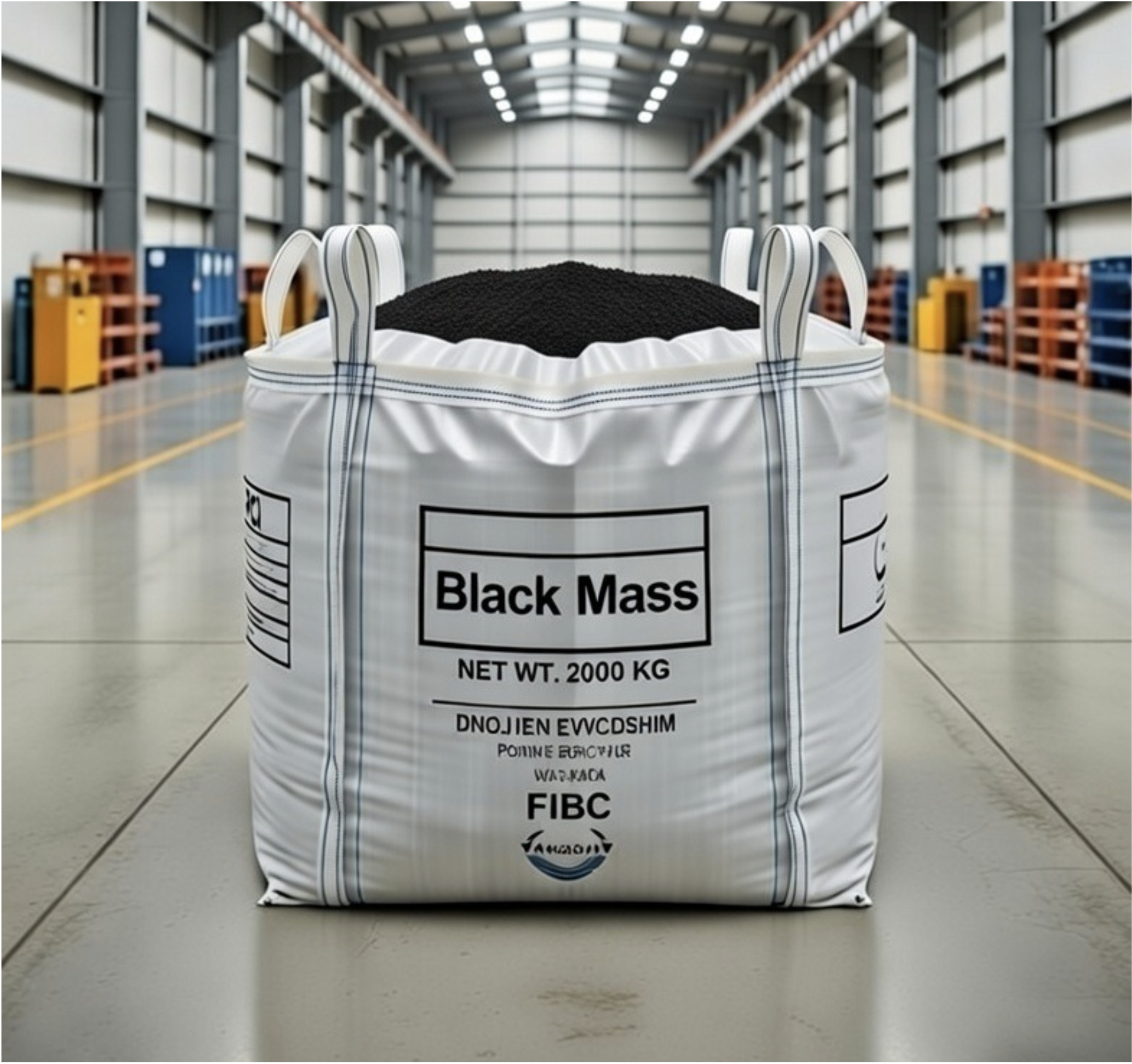
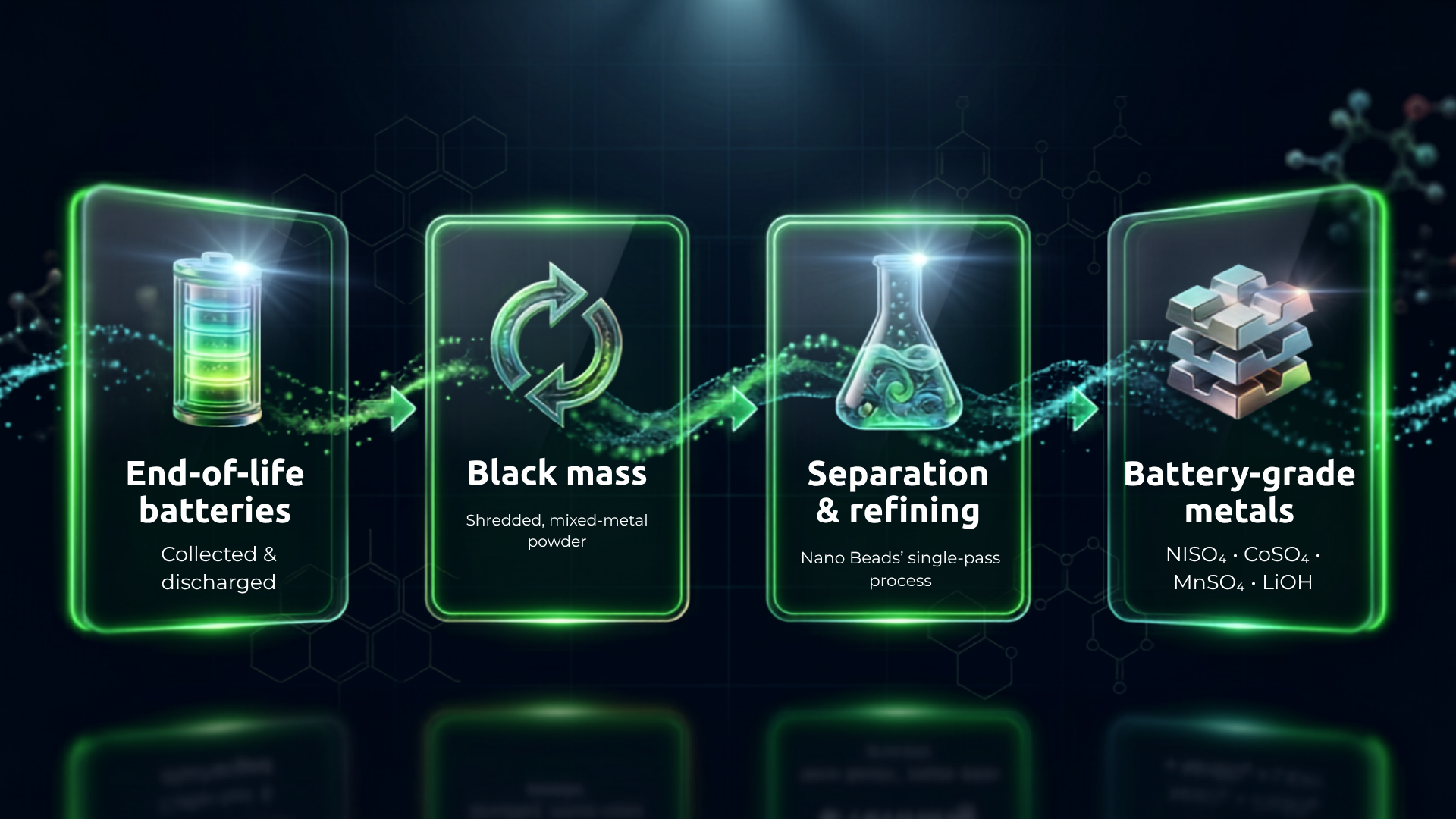
Precision Periodic's Clean Refinery is engineered to do more than recover critical minerals from spent process media and manufacturing scrap — the same Nano Beads™ media and modular Multi-Scale Refining Units (MSRU) can process black mass, the shredded, mixed-metal powder recovered from end-of-life lithium-ion batteries, and refine it into separated, battery-grade nickel, cobalt, lithium, manganese, and graphite.
This isn't a new technology bolted on as an afterthought — it's the same selective, low-energy hydrometallurgical process already validated through a Department Of Energy grant, applied to one of the largest and fastest-growing feedstock streams in the energy transition.
Why Black Mass
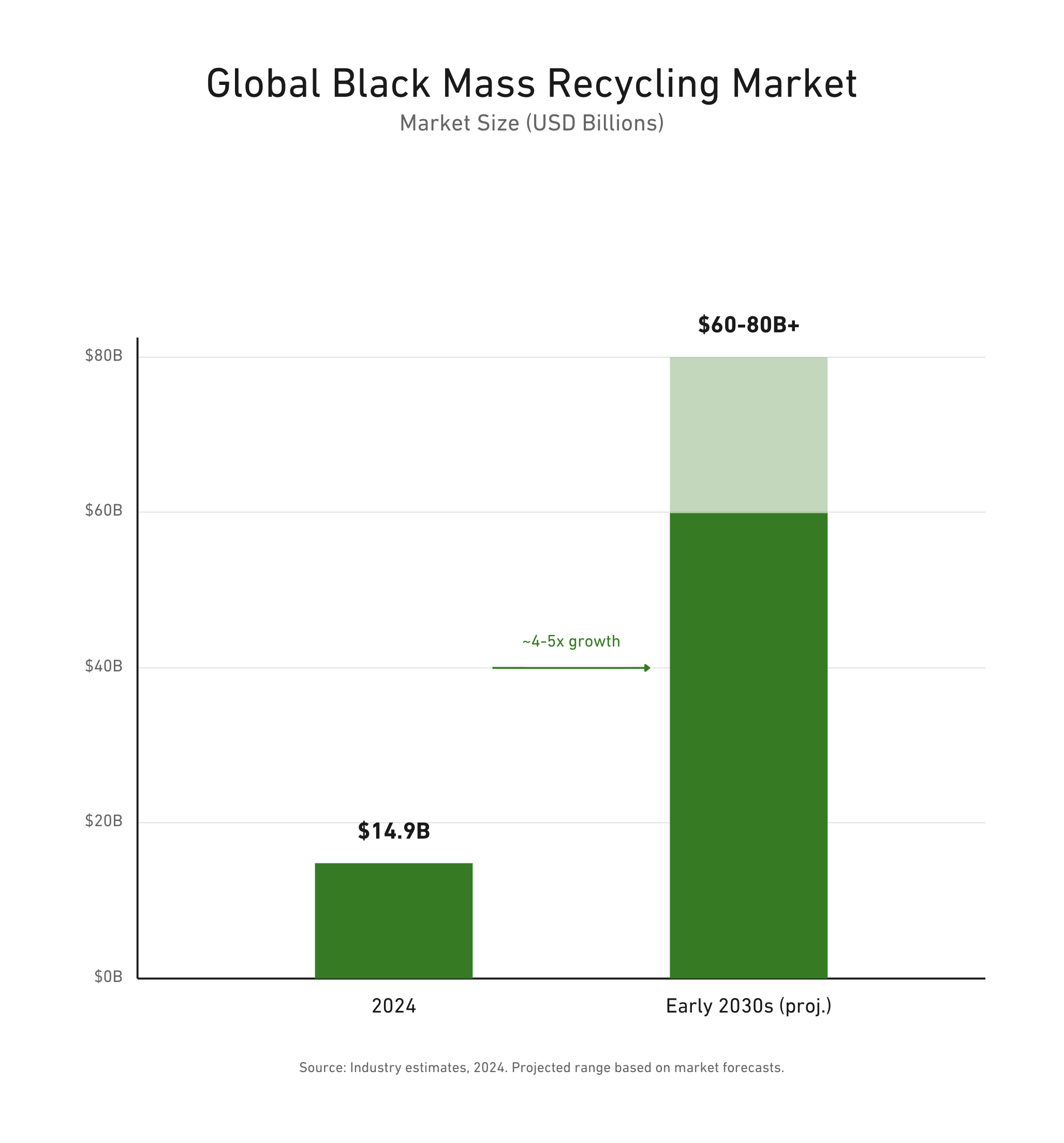
The global black mass recycling market was valued at roughly $14.9 billion in 2024 and is projected to grow into the $60–80+ billion range by the early 2030s. The feedstock wave is already arriving: batteries from the 2017–2022 EV adoption surge are reaching end-of-life on their typical 8–10 year cycle, and that supply is set to accelerate sharply starting in 2026.
Nano Beads™ is built for exactly this challenge — fast adsorption and desorption kinetics, high mechanical durability, and the selectivity to pull individual metals out of a complex mixed stream and turn them into high-purity, sale-ready compounds like nickel sulfate, cobalt sulfate, and lithium hydroxide, achievable in minutes rather than hours.
Built, Validated, and Ready
The Clean Refinery's black mass capability is technically ready today. What we're waiting on is the market.
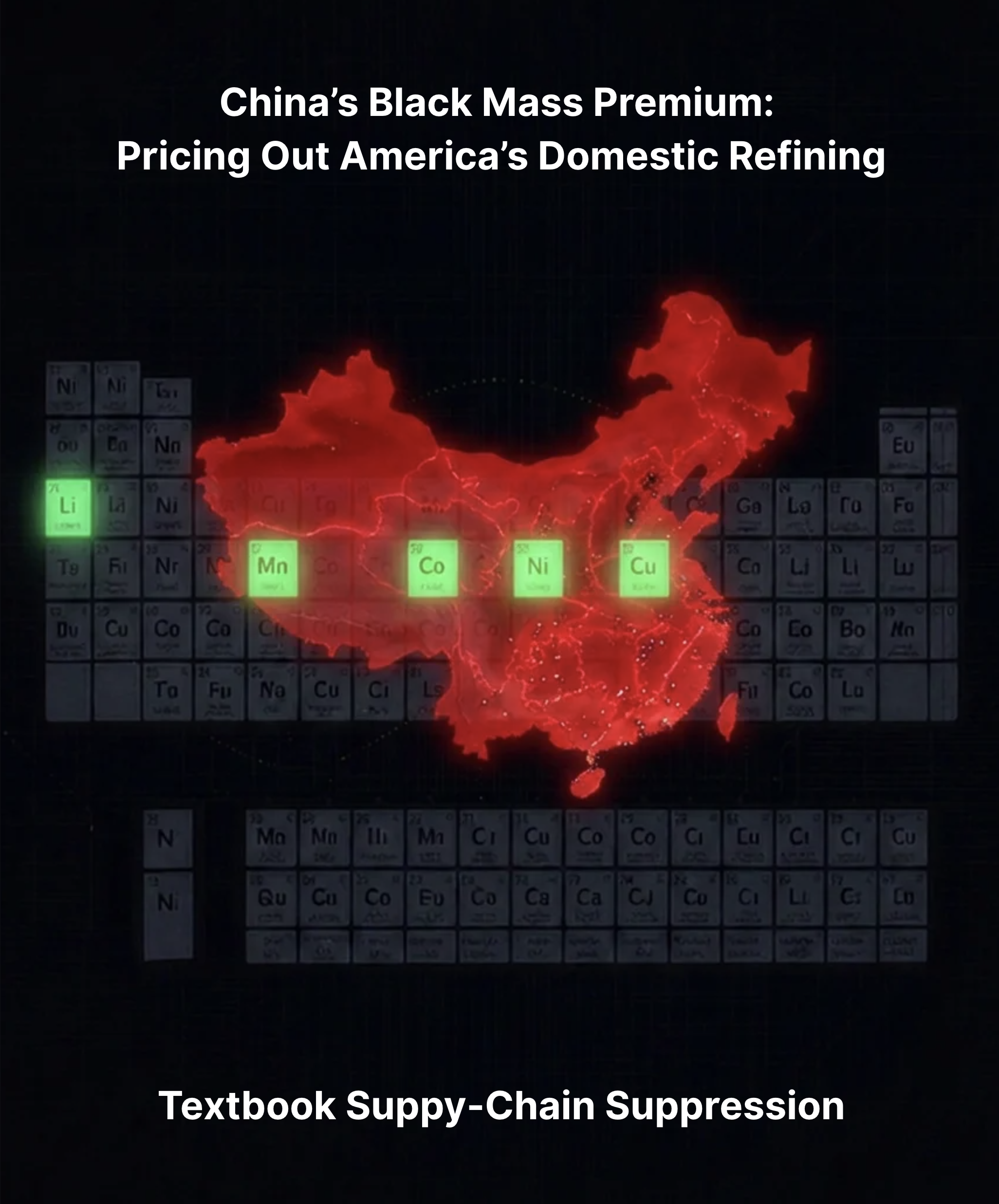
Right now, black mass pricing is being driven well above the actual recoverable metal value by China. That kind of pricing makes economic sense only as a strategy: it keeps feedstock flowing offshore and discourages new domestic processing capacity from being built in the United States.
We're not interested in operating a black mass refinery that loses money on every ton of feedstock just to compete with that dynamic. Instead, we're positioning the Clean Refinery to bring this capability online the moment the economics shift in favor of domestic processing — whether through normalizing black mass pricing, IRA domestic-content incentives, EU recycled-content mandates, or direct customer commitments that make a long-term toll-processing or integrated-recycling arrangement viable.
What This Means for Partners
-
If you are generating black mass or plan to in the near future: we're ready to discuss toll processing arrangements and long-term offtake structures that activate when the numbers work.
-
A domestic, policy-aligned source of separated battery-grade metals is closer than it looks — the platform exists, validated and DOE-supported, and can scale into this application.
-
Black Mass separation and purification represents a second, large-scale application of technology we've already de-risked, sitting on top of an accelerating feedstock wave and a clear (if currently distorted) demand signal.